Lisbon, the capital of Portugal, is a vibrant, coastal city built across seven dramatic hills along the Tagus River. Combining centuries of maritime history with modern charm, it captivates visitors through its sun-drenched plazas, colorful tiled facades, and the soulful melodies of live Fado music. Distinct neighborhoods like Alfama and Baixa showcase a striking architectural mix of Manueline, Baroque, and Pombaline styles. Celebrated for its world-class seafood, iconic pastéis de nata, and historic yellow trams, Lisbon provides an unforgettable getaway for culture seekers and history enthusiasts alike.
Standing on the banks of the Tagus River, Belém Tower is a UNESCO World Heritage site that embodies Portugal's Age of Discovery. Constructed between 1514 and 1519 under King Manuel I, the four-story fortress served as both a river defense system and a ceremonial gateway for maritime explorers. Its striking architecture showcases the distinct Portuguese Manueline style, adorned with intricate stone carvings, armillary spheres, and twisted rope motifs. Visitors can cross the wooden drawbridge to explore its bastions, ancient gun chambers, and upper terrace.
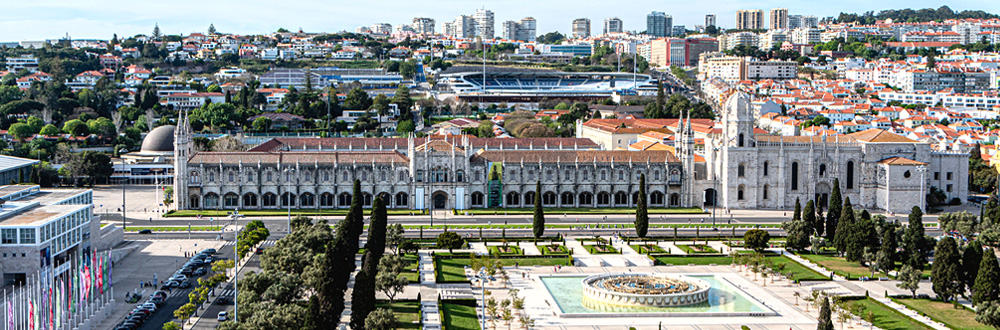
Adjacent to Belém Tower, the Jerónimos Monastery stands as a masterpiece and the ultimate symbol of Portugal's maritime legacy. Commissioned by King Manuel I in 1501 to commemorate Vasco da Gama's sea route to India, the grand complex showcases opulent Manueline architecture complete with intricate stone carvings, limestone motifs, and breathtaking two-story cloisters. The monastery's Church of Santa Maria houses the limestone tombs of Vasco da Gama and poet Luís de Camões, offering visitors a profound journey into the spiritual and cultural peak of the nation's Golden Age.
Embracing the essence of old Lisbon, Alfama is a labyrinth of narrow cobbled streets, colorful historic houses, and ancient tile-clad facades. As the city's oldest medieval district, its laundry-hung balconies, steep stairways, and hidden plazas preserve a rustic, authentic atmosphere. At night, the haunting melodies of traditional Fado music echo from intimate taverns, telling stories of love, ocean journeys, and nostalgia. Perched on its highest hilltop, the historic São Jorge Castle overlooks the neighborhood, while the 12th-century Lisbon Cathedral stands as an anchor along its winding tram paths.
The Lisbon Cathedral stands as a symbol of the city's rich history. Founded in 1147 following the Siege of Lisbon, the fortified structure features a dramatic twin-towered fortress facade designed to withstand sieges and earthquakes. Over the centuries, rebuilds and additions have created a unique architectural blend of Romanesque arches, Gothic cloisters, and Baroque chapels. Inside, visitors can explore the treasury containing sacred relics and access the high ambulatory to view active archaeological excavations revealing ancient Roman and Moorish ruins beneath the cathedral floor.
An elegant and vibrant district, Chiado embodies Lisbon's cultural and literary heart. Rebuilt after a devastating 1988 fire by architect Álvaro Siza Vieira, the neighborhood seamlessly blends 18th-century Pombaline architecture with sophisticated modern city life. It is home to Livraria Bertrand, recognized as the world's oldest operating bookstore, as well as the historic Café A Brasileira, famously frequented by poet Fernando Pessoa. Visitors strolling down Rua Garrett will find high-end boutiques, traditional tile shops, and historic venues like the São Carlos National Theatre.
Positioned along the Tagus River, Praça do Comércio serves as Lisbon's grandest riverfront plaza and the entrance to the city center. Designed in an expansive U-shape flanked by yellow Pombaline arcades, the square sits on the site of the former Terreiro do Paço royal palace, destroyed in the 1755 earthquake. At its center stands the monumental bronze equestrian statue of King José I, anchored by the iconic Rua Augusta Arch at its northern end. Today, the historic square remains a bustling hub filled with waterfront terraces, street performers, and centuries-old eateries.
Rossio Square serves as the vibrant historical heart and central meeting place of Lisbon's downtown district. Renowned for its distinctive calçada portuguesa undulating wave-patterned cobblestones, the square features a soaring 27-meter column dedicated to King Pedro IV flanked by two monumental 19th-century French bronze fountains. Historically the site of royal celebrations, public executions, and bullfights, the plaza is today bordered by classic Pombaline architecture, the majestic Queen Maria II National Theatre, and legendary literary spots like Café Nicola.
Dedicated to Portugal's cherished ceramic art form, the National Azulejo Museum offers an immersive journey through five centuries of decorative tile tradition. Housed inside the 16th-century Madre de Deus Convent, the museum showcases an extensive collection of glazed tiles featuring intricate geometric patterns, religious motifs, and historical narratives. Highlights include the magnificent Mannerist church interior and a monumental 23-meter tile panorama depicting pre-earthquake Lisbon. The exhibits detail the evolution of tile craftsmanship from Moorish influences to contemporary designs.
The Oceanário de Lisboa ranks among Europe's largest and most acclaimed indoor aquaria. The striking structure floats over a water basin and houses over 8,000 marine creatures across 500 species. Its centerpiece is a massive five-million-liter central aquarium representing the global ocean, surrounded by four distinct habitats recreating the North Atlantic, Antarctic, Temperate Pacific, and Tropical Indian oceans. Through immersive exhibits featuring sea otters, penguins, and sunfish, the oceanarium actively promotes global marine conservation and environmental education.
A testament to Lisbon's creative spirit, LX Factory is an urban hub revitalized from an 1846 industrial textile complex. The 23,000-square-meter compound buzzes with artistic energy, housing design studios, street art murals, concept stores, and eclectic eateries. Highlights include the famous Ler Devagar bookstore, where soaring shelves of books surround hanging bicycle sculptures. Serving as a platform for local artisans and entrepreneurs, this dynamic district hosts Sunday flea markets, live music, and cultural events, making it a staple of modern Portuguese culture.