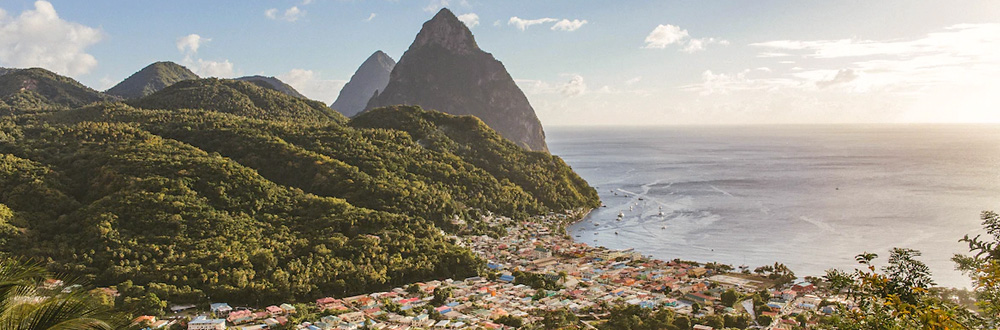
Anchored in the Eastern Caribbean, St. Lucia features 238 square miles of volcanic terrain, dense rainforests, and dramatic coastal topography. The island's signature geographic landmarks, the Pitons, rise sharply above lush valleys and pristine coral reef marine reserves. Visitors explore high-elevation hiking trails, zip-line canopy routes, and coastal markets serving traditional Creole cuisine. With tropical trade winds, sulfur mineral springs, and sheltered bays, St. Lucia delivers a diverse landscape tailored for eco-tourism, outdoor adventure, and historical site exploration.
Dominating the southwestern coast of St. Lucia near Soufrière, the Pitons stand as twin UNESCO World Heritage volcanic spires rising sharply from the ocean. Gros Piton reaches an elevation of 2,619 feet, while the steeper Petit Piton towers at 2,461 feet. Formed by ancient volcanic dome collapses, these iconic spires shelter rich terrestrial ecosystems and deep-water coral marine reserves. Guided hiking trails up Gros Piton navigate dense rainforest and steep boulder fields, rewarding climbers with panoramic vistas over the Caribbean Sea and surrounding rainforest terrain.
Founded by French settlers in 1746, Soufrière served as the island's original capital. The coastal town sits at the base of the Pitons, framed by colorful French colonial architecture and active geothermal terrain. Nearby sites include the Sulphur Springs geothermal crater, Diamond Falls Botanical Gardens, and dark-sand shorelines like Anse Chastanet and Sugar Beach. Visitors navigate walkable historic streets, tour active cocoa estates, and access offshore marine reserves. Soufrière delivers a dense concentration of historical infrastructure and unique volcanic landmarks.
Encompassing a 44-acre peninsula in northern St. Lucia, Pigeon Island preserves major 18th-century fortifications built during Anglo-French colonial conflicts. Visitors tour historic stone barracks, visit the small on-site museum, and ascend steep stone paths to the signal station at Fort Rodney. Coastal trails lead to sheltered white-sand beaches, grass lawns, and waterfront restaurants. The national landmark serves as a primary cultural site, hosting annual music festivals alongside year-round historic exploration, scenic trail hiking, and coastal recreation.
Marigot Bay offers a sheltered deep-water harbor on St. Lucia's western coast, long recognized as a historic naval hideout and modern luxury anchorage. High green ridges enclose the turquoise lagoon, protecting berthed sailboats, charter yachts, and catamarans from open ocean swells. Travelers explore mangrove wetlands via kayak, relax on the palm-lined sandspit, or dine at open-air waterfront taverns. Water taxis connect the north and south shores continuously, giving guests seamless access to hillside spa resorts, dive centers, and coastal charter excursions throughout the day.
The Anse Chastanet Marine Reserve borders a secluded dark-sand beach near the Pitons, providing direct shore access to protected Caribbean coral gardens. Roped-off snorkel zones allow visitors to safely observe colorful reef fish, moray eels, and hawksbill turtles along the upper shelf. Offshore, the seabed drops into a vertical wall plunging over 100 feet into deep water, catering to certified scuba divers. Boat charters and beachside dive shops supply gear rentals and guided tours, establishing this reserve as a premier underwater destination on St. Lucia.
Rodney Bay anchors the Gros Islet district as a vibrant coastal resort community and full-service harbor. The site features shallow, protected waters ideal for swimming, windsurfing, and beachfront relaxation along Reduit Beach. A paved waterfront promenade connects the commercial center with Rodney Bay Marina, where travelers access sailing charters, duty-free boutiques, and international dining. Minutes south of Pigeon Island, the district provides straightforward road access, extensive resort infrastructure, and continuous water sports operations for visitors exploring northern St. Lucia.
The Tet Paul Nature Trail offers a gentle, family-friendly hike in the mountains overlooking St. Lucia's southwestern coast. Designed for all fitness levels, the 0.6-mile path features wooden steps and clear signage framed by tropical flowers, cassava fields, and native fruit trees. Local guides escort walking groups, identifying medicinal herbs, exotic birds, and nearby agricultural communities. High-elevation viewpoints deliver unobstructed, panoramic photos of both Piton peaks and the distant Caribbean horizon, presenting an effortless alternative to strenuous mountain summits.
Diamond Falls Botanical Gardens anchors a historic French land grant along the eastern edge of Soufrière. Walking trails lead visitors through tropical floral collections, banana groves, and educational botanical displays. The trail terminates at a mineral waterfall where volcanic sediments coat the rock face in vivid shades of orange, yellow, and green. Facilities include warm public and private mineral soaking baths, an educational heritage center, and an historic estate house. The site provides a highly educational walk through St. Lucia's natural flora and volcanic history.
Operating since 1891, Castries Market functions as the island's primary commercial trading center. Beneath a historic cast-iron roof, hundreds of local vendors gather daily to sell fresh tropical produce, indigenous spices, and local hot sauces. An adjacent open-air craft market features woven straw goods, handmade wood carvings, clothing, and Caribbean souvenirs. Local food stalls serve traditional Creole lunches, including fried fish and green fig salad. The market complex provides an authentic, high-density look at regional agriculture, commerce, and daily cultural life.
Formed by a massive volcanic collapse roughly 30,000 years ago, Sulphur Springs represents St. Lucia's most significant geothermal feature. The site features steaming solfataras and boiling mud cauldrons monitored continuously by seismic equipment. Paved access roads lead directly to thermal bathing pools, where mineral waters rich in sulfur, iron, and magnesium attract visitors seeking natural skin treatments. Complete with guided safety tours and visitor amenities, the drive-in volcanic park delivers a dense, highly memorable demonstration of active Caribbean geology.