Antigua anchors the outer arc of the Lesser Antilles, combining rich naval heritage with extensive beach access. The southern coastline preserves 18th-century British fortifications and dockyards, offering walkable historic sites, museum exhibits, and active sailing marinas. Inland roads connect rolling green hills with coastal mangrove estuaries and reef-protected bays. Visitors explore bustling markets in St. John's, tour restored sugar plantation ruins, and access premier sailing waters. The island provides an accessible, practical destination for maritime history enthusiasts and coastal travelers.
Established in 1725 as a hurricane haven for the Royal Navy, Nelson's Dockyard encompasses 15 square miles of protected national parkland. The site contains fully restored Georgian military structures constructed from imported yellow ballast brick and native timber. Visitors explore historic sail lofts, blacksmith shops, and naval artillery displays while watching active wooden boat maintenance along the harbor walls. With year-round marina operations, museum archives, and waterfront event spaces, the complex remains Antigua's premier cultural landmark and maritime heritage site.
English Harbour serves as a major international yachting anchor and historic naval station. The deep-water basin houses modern marina slips, vessel repair yards, and 18th-century stone fortifications. Historic colonial buildings along the quay house open-air seafood restaurants, sailing schools, and charter broker offices. Visitors access coastal hiking paths leading to elevated lookouts, explore maritime museum collections, and observe international sailing fleets. The harbor provides essential shelter, marine services, and deep historical context for island visitors.
Rising 490 feet above sea level, Shirley Heights Lookout occupies a restored 18th-century British military gun battery directly overlooking English Harbour and Falmouth Harbour. The complex features stone signal station ruins, observation decks, and clear line-of-sight views extending across to Guadeloupe and Montserrat on clear days. Every Sunday afternoon, the site hosts a long-running outdoor gathering with live steelpan music, Caribbean barbecue, and reggae bands. The lookout delivers an essential mix of colonial military infrastructure, high-elevation photography, and cultural traditions.
Enclosed by living coral barriers off Mercer's Creek, Stingray City Antigua serves as a dedicated wildlife sanctuary and ecotourism hub. Visitors board shade-covered pontoon boats to reach the open-water sandbar, where dozens of Southern Stingrays gather in clear, chest-deep ocean waters. Snorkelers observe the rays' swimming mechanics, feed them squid under guide supervision, and view nearby brain coral formations. With low currents and high visibility, the site remains an essential, highly specialized stopover for travelers interested in marine biology and hands-on wildlife interaction.
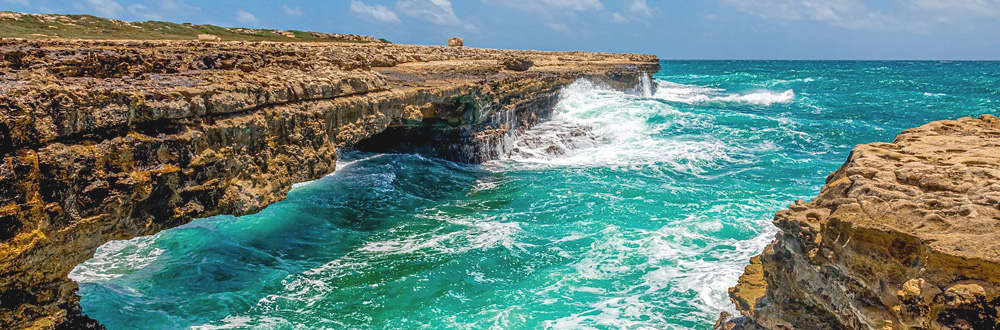
Formed by thousands of years of Atlantic wave erosion on Antigua's easternmost limestone headland, Devil's Bridge National Park features a natural arch and active marine blowholes. Surrounding limestone ledges house multiple natural geysers that shoot seawater high into the air as Atlantic swells force water through underwater caves. Interpretive plaques details the geological formation and solemn cultural history associated with the site. The national park offers rugged coastal walking paths, wide ocean views, and direct observation of active coastal erosion processes.
Fig Tree Drive connects the central plains to the southwestern coast, offering a paved transit route through Antigua's green mountain belt. The winding road features tight turns, steep elevation changes, and shaded forest stretches framed by wild bougainvillea and tropical foliage. Travelers stop along the route at roadside vendor stalls, eco-tour operations, and historic village sites like St. Mary's Church. Functioning as a popular self-drive or taxi tour circuit, the highway delivers an accessible look at rural island life, tropical botany, and agricultural history.
Saint John's Cathedral anchors the eastern slope of Church Street in downtown St. John's, offering wide urban views over the capital and cruise harbor. Pedestrian paths lead visitors through a shaded historic cemetery filled with carved slate headstones to the main stone portal. Inside, double-encased wooden walls protect central aisle pews, memorial plaques, and intricate altar carvings. Positioned within walking distance of government buildings and craft markets, the working cathedral delivers an accessible, highly informative stop for travelers examining 19th-century architectural engineering.
Fronting the Caribbean Sea, Darkwood Beach features a broad half-mile strip of fine white sand along Antigua's southwestern coast. The beach slopes gently into calm, low-current waters framed by a natural mangrove lagoon directly inland. Offshore rock formations and nearshore coral heads support sea urchins, parrotfish, and damselfish, creating accessible conditions for snorkeling. Local beach bars supply lounge chair rentals, fresh seafood dining, and water sports equipment, while the backdrop of the Shekerley Mountains provides continuous wind protection for visitors.
Established in 1654, Betty's Hope operated as Antigua's first large-scale sugar plantation and administrative agricultural estate. The historical site preserves two massive stone windmill towers, one fully restored with operational timber sails, gears, and crushing machinery. An on-site visitor center museum housed in a former cotton house displays archaeological artifacts, plantation maps, and historical records detailing colonial sugar production. The open-air complex provides dry historical data, preserved industrial ruins, and context regarding the island's 18th-century agrarian economy.
The Museum of Antigua & Barbuda stands on Long Street near the St. John's cruise ship docks, offering an accessible, walkable stop for urban visitors. Self-guided exhibits guide travelers through chronological displays featuring pottery shards, colonial naval models, and historical maps. Informational placards detail the island's geological formation, indigenous settlements, transatlantic slavery, and modern political independence. Complete with a reference library and gift shop, the city landmark delivers an informative, highly structured educational experience for travelers.