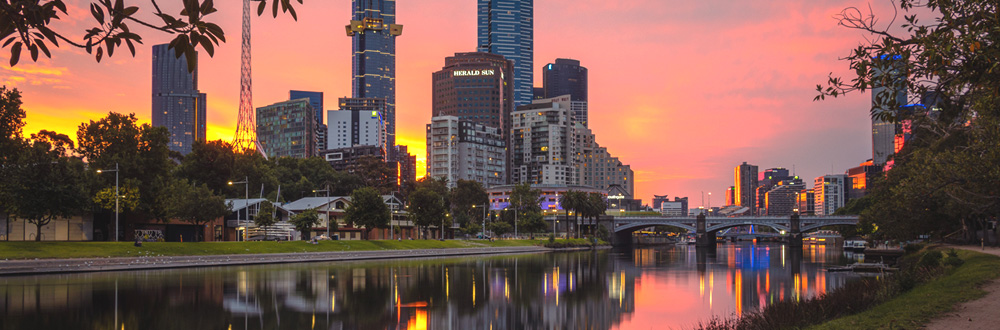
Melbourne is the capital of Victoria, situated on Port Phillip Bay in southeastern Australia. Founded in 1835, the city features a grid layout known as the Hoddle Grid, characterized by Victorian-era architecture alongside modern skyscrapers. As Australia's second-most populous urban area, Melbourne serves as a primary financial and cultural hub, housing major institutions such as the National Gallery of Victoria and the Royal Exhibition Building. The metropolis is recognized globally for its extensive tram network, historic laneway precincts, coffee heritage, and sporting infrastructure.
Queen Victoria Market is a 7-hectare historic commercial hub located on the northwestern edge of the Melbourne CBD. Operating continuously since 1878, it is the largest open-air market in the Southern Hemisphere and is listed on the National Heritage List. Built atop Melbourne's first central cemetery, the complex features historic open shed structures, the Meat & Fish Hall, and the central Deli Hall. Housing over 600 small business vendors, the market serves as a primary urban center for fresh regional produce, specialty food items, clothing, and seasonal night market events.
Federation Square is a 3.2-hectare civic center and cultural precinct located at the intersection of Flinders and Swanston Streets. Opened in 2002 directly above rail lines adjacent to Flinders Street Station, the plaza features a distinctive deconstructivist architectural design framed by fractured geometric sandstone facades. The site houses key cultural institutions, including the Australian Centre for the Moving Image and the Ian Potter Centre: NGV Australia. With its central outdoor paved square and large digital screen, the complex functions as Melbourne's primary public gathering space.
The Royal Botanic Gardens is a 38-hectare botanical reserve situated on the south bank of the Yarra River. Established in 1846, the heritage-listed grounds feature over 8,500 plant species, incorporating native Australian flora alongside exotic collections, manicured lawns, and Ornamental Lake. The site houses important scientific facilities, including the National Herbarium of Victoria, which contains over 1.5 million preserved plant specimens. Bordered by Birdwood Avenue and the King's Domain, the gardens serve as a core conservation hub, research site, and public recreational space.
The Melbourne Cricket Ground is a major sports stadium situated in Yarra Park, Melbourne. Established in 1853, the venue is the largest stadium in the Southern Hemisphere, boasting a capacity of over 100,000 spectators. The heritage-listed arena serves as the central venue for Australian Rules football and international cricket, while historically hosting the 1956 Summer Olympics and the 2006 Commonwealth Games. Featuring 85-meter light towers and the National Sports Museum within its Members Pavilion, the stadium remains a core hub for Australia's national sports infrastructure.
The National Gallery of Victoria is Australia's oldest and most visited public art museum, situated on St Kilda Road in Melbourne's Arts Precinct. Opened at its current site in 1968, the building was designed by architect Sir Roy Grounds and is distinguished by its bluestone facade, water wall entrance, and Leonard French stained-glass ceiling. The museum houses an international collection of over 75,000 works spanning European, Asian, American, and Oceanic art traditions. Key holdings include European Old Masters, antiquities, modern decorative arts, and major contemporary installations.
St Kilda Beach is a 700-meter sandy shoreline located on Port Phillip in St Kilda, 6 kilometers south of central Melbourne. Developed as a seaside resort in the mid-19th century, the beach features a low-energy urban shoreline protected by the historic St Kilda Pier and breakwater, which houses a resident colony of little penguins. The foreshore precinct encompasses the St Kilda Sea Baths, wide pedestrian promenades, and palm-lined public parks. Bordered by the Esplanade, the site serves as a major focal point for water sports, outdoor recreation, and coastal public events.
Melbourne Museum is a major natural and cultural history museum located in Carlton Gardens. Opened in 2000, the post-modern building designed by Denton Corker Marshall is the largest museum in the Southern Hemisphere. The facility houses eight main galleries, including the Bunjilaka Aboriginal Cultural Centre, a living Forest Gallery, complete blue whale skeleton, and extensive paleontological holdings. Operated by Museums Victoria, the complex incorporates the IMAX Theatre Melbourne and maintains comprehensive scientific collections and research archives.
The Melbourne Zoo is a 22-hectare zoological park located within Royal Park in Parkville. Opened in 1862, it is Australia's oldest zoological institution, modeled originally on the Zoological Society of London. The facility houses over 320 animal species organized into bio-climatic zones, including Trail of the Elephants, the African Rainforest precinct, and the Australian Bush enclosure. Managed by Zoos Victoria, the heritage-listed grounds function as a major global conservation research center, running targeted breeding and recovery initiatives for critically endangered regional species.
Eureka Tower is a 297-meter residential skyscraper situated in the Southbank precinct of central Melbourne. Completed in 2006, the 91-story structure features an architectural design inspired by the 1854 Eureka Stockade rebellion, incorporating blue glass curtain walls, a gold-plated apex, and thin red stripes. The building's 88th floor houses Melbourne Skydeck, the highest public observation platform in the Southern Hemisphere. The deck features "The Edge," a glass cube that projects 3 meters outward from the building's facade, offering suspended views 285 meters above ground level.
The Great Ocean Road (B100) is a 243-kilometer heritage-listed coastal highway stretching between Torquay and Allansford. Constructed by returned soldiers between 1919-1932, it serves as the world's largest war memorial, dedicated to fallen World War I personnel. The route traverses rainforests, limestone sea cliffs, and Port Campbell National Park, which contains notable offshore rock stacks including the Twelve Apostles and Loch Ard Gorge. Built to connect isolated coastal settlements, the roadway functions today as a primary transport route and significant regional tourism corridor.