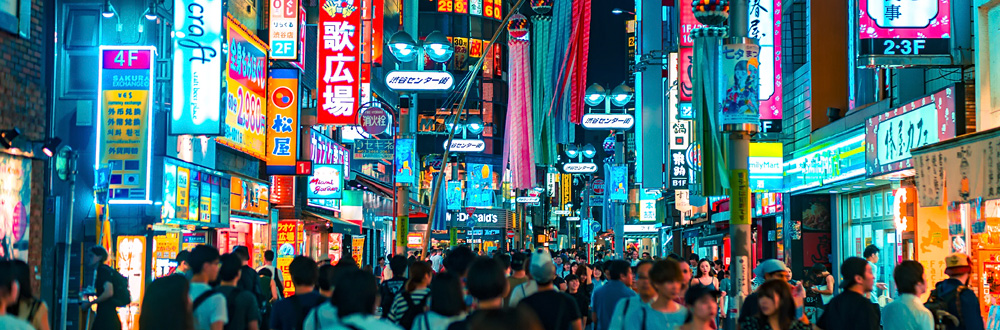
Tokyo is Japan's capital and largest metropolitan area. Serving as the nation's political, economic, and cultural center, the region houses over 14 million residents within its city limits and roughly 37 million across the Greater Tokyo Area. The city comprises 23 central special wards and outer island territories. Key infrastructure includes the Yamanote rail line loop, two major international airports, and distinct commercial sectors including Shibuya, Shinjuku, and Chiyoda. Primary landmarks include Senso-ji, Tokyo Skytree, Tokyo Tower, and the Imperial Palace.
Senso-ji is an ancient Buddhist temple complex covering 130,000 square meters in Tokyo's Asakusa district. Founded in 645 AD, it is Tokyo's oldest temple, dedicated to the bodhisattva Kannon. Visitors enter through the Kaminarimon, which features a 700-kilogram red paper lantern, leading to Nakamise-dori, a 250-meter historic shopping street operating since the Edo period. The inner precinct contains a five-story pagoda, a purification pavilion, an incense burner, and the Main Hall. Rebuilt after World War II using reinforced concrete, the site hosts major annual cultural events.
Tokyo Skytree is a 634-meter broadcasting and observation tower located in Tokyo's Sumida district. Designed by Nikken Sekkei, it is the tallest structure in Japan and the world's tallest freestanding tower. The architectural design transitions from a triangular base to a cylindrical upper shaft, incorporating a central concrete column engineered for seismic vibration control. Public amenities include primary observation decks at 350 and 450 meters, alongside Tokyo Solamachi, an adjacent 36,900-square-meter commercial development housing retail outlets, an aquarium, and a planetarium.
Shibuya Crossing is a high-volume pedestrian intersection located outside the Hachiko Exit of Shibuya Station. Operating as a scramble intersection, all vehicular traffic halts simultaneously, allowing up to 3,000 pedestrians to traverse the junction per signal cycle during peak hours. The surrounding urban plaza features large-scale LED displays, retail towers, and the Hachiko copper statue. The intersection processes an estimated 250,000 to 300,000 pedestrians daily, serving as a primary pedestrian transit and commercial anchor for the surrounding retail, entertainment, and fashion districts.
Meiji Shrine is a 70-hectare Shinto shrine complex located in Tokyo's Shibuya district. Established in 1920 to honor Emperor Meiji and Empress Shoken, the grounds feature a 170-acre reforested woodland containing roughly 100,000 trees donated from across Japan. Entry to the sacred precinct is marked by massive wooden torii gates constructed from 1,500-year-old Taiwanese cypress. Main facilities include the Naien housing the imperial treasure museum, the Gaien featuring the Meiji Memorial Picture Gallery, and central worship structures.
Tsukiji Outer Market is a historic retail food district covering roughly 23,000 square meters adjacent to the former wholesale market site in Tokyo's Chuo district. Established alongside the primary wholesale facility, the area retained its full network of over 400 retail shops and restaurants following the inner market's relocation to Toyosu. The narrow pedestrian alleys contain specialized vendors selling fresh seafood, knives, kitchenware, and regional street foods—including tamagoyaki and grilled scallops. The district remains a primary culinary commercial hub, processing thousands of daily visitors.
Akihabara is a commercial district in Tokyo's Chiyoda ward, centered around Akihabara Station. Originally established as a post-WWII black market for radio parts and vacuum tubes, the area evolved into Japan's primary retail hub for consumer electronics and household appliances during the mid-20th century. By the late 1990s, the district transitioned into a global center for otaku subculture, hosting multi-story consumer electronics retailers, retro video game vendors, anime merchandise outlets, maid cafes, and specialized hobby shops across its main thoroughfare, Chuo-dori.
Ueno Park is a 53-hectare public park located in Tokyo's Taito district, established in 1873 as one of Japan's first public parks. Occupying the former grounds of Kan'ei-ji temple, the site incorporates Shinobazu Pond, an expansive natural body of water featuring lotus plants and a bentendo sanctuary. The park serves as a major cultural complex, housing the Tokyo National Museum, National Museum of Nature and Science, Tokyo Metropolitan Art Museum, and Ueno Zoo—Japan's oldest zoo, founded in 1882. The grounds contain over 1,000 cherry trees, serving as a primary site for hanami.
Tokyo Imperial Palace is a 1.15-square-kilometer complex located in Tokyo's Chiyoda ward. Serving as the primary residence of the Emperor of Japan since 1868, the grounds contain the main palace, imperial residences, administrative offices, and museums. While the inner palace remains restricted, public access is permitted to the Imperial Palace East Gardens, Ninomaru Park, and Kokyo Gaien plaza. Surrounding infrastructure includes historic Edo-period stone ramparts, defense moats, double-arched stone bridges, and original watchtowers preserved within a fortified urban park layout.
Harajuku is an urban district located around Harajuku Station in Tokyo's Shibuya ward. Centered along the 350-meter Takeshita Street pedestrian zone, the area developed into Japan's primary center for youth culture, street fashion, and extreme subcultural aesthetics. The neighborhood operates as a high-density commercial corridor, contrasting narrow alleys filled with independent vintage boutiques and crepe stands against the adjacent Omotesando Avenue, a broad boulevard lined with luxury fashion houses, designer retail brands, and complex architectural developments.
Odaiba is a large artificial island in Tokyo Bay, spanning the Minato, Koto, and Shinagawa wards. Originally constructed in the 1850s as six island fortresses for coastal defense against foreign naval forces, the landmass was redeveloped during the 1990s into a major commercial, residential, and leisure district. Connected to central Tokyo via the 798-meter Rainbow Bridge, the area houses Kenzo Tange's iconic Fuji TV Building, the DiverCity Tokyo Plaza complex featuring a life-sized Gundam statue, Tokyo Joypolis, Aqua City, and the borderless digital art museum at Azabudai Hills.